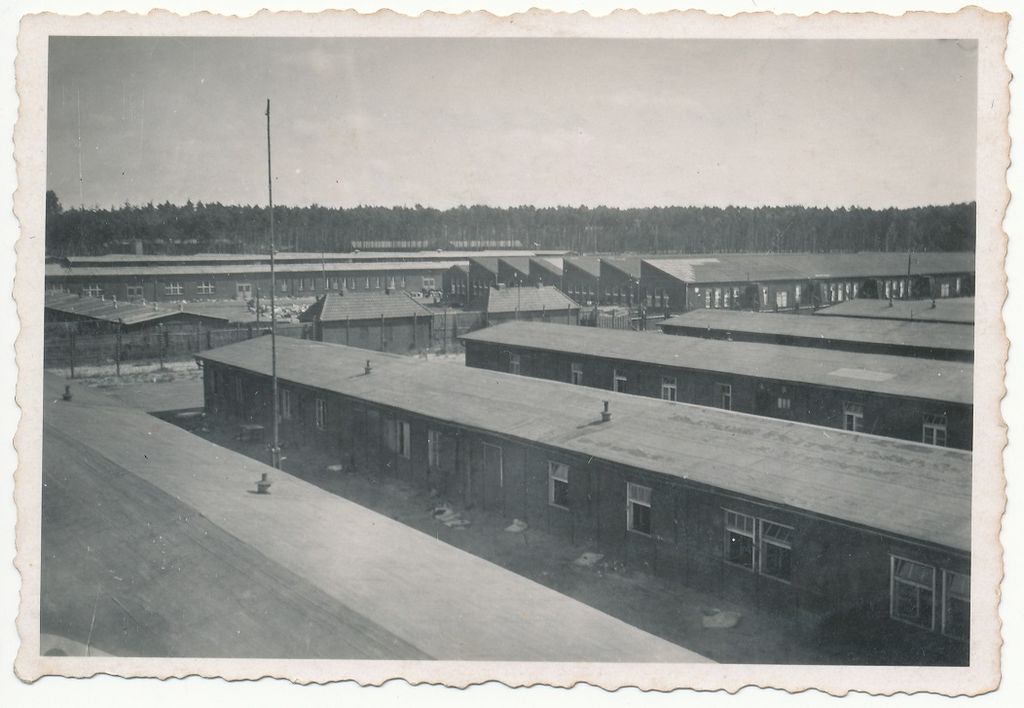

The Ravensbrück Memorial Site conducted a research and exhibition project on the men's camp from June 2023 onwards. During the period from 1941 to 1945, more than 20,000 male prisoners were incarcerated in Ravensbrück and, from 1943 onwards, in the associated subcamps and commands, who were deployed by the SS primarily for the construction and expansion of the camp complex's infrastructure. Almost 80 years after liberation, the public knew relatively little about the men's camp, its role in the camp complex, and the conditions for prisoners there, despite relevant research.
The goal of the project was to close these research gaps, make the topic known to the public, and appropriately integrate the history of the men's camp into the memory of Ravensbrück. Although the source material overall can be described as scattered, the almost complete preservation of the prisoner register offered the opportunity to convey a comprehensive picture of this camp.
The former block clerk Józef Kwietniewski managed to rescue the prisoner documentation with the register during the liberation of the camp. The SS attempted to destroy the records during the dissolution of the camps. Today the original is held in the archive of the Institute of National Remembrance (IPN) in Warsaw.
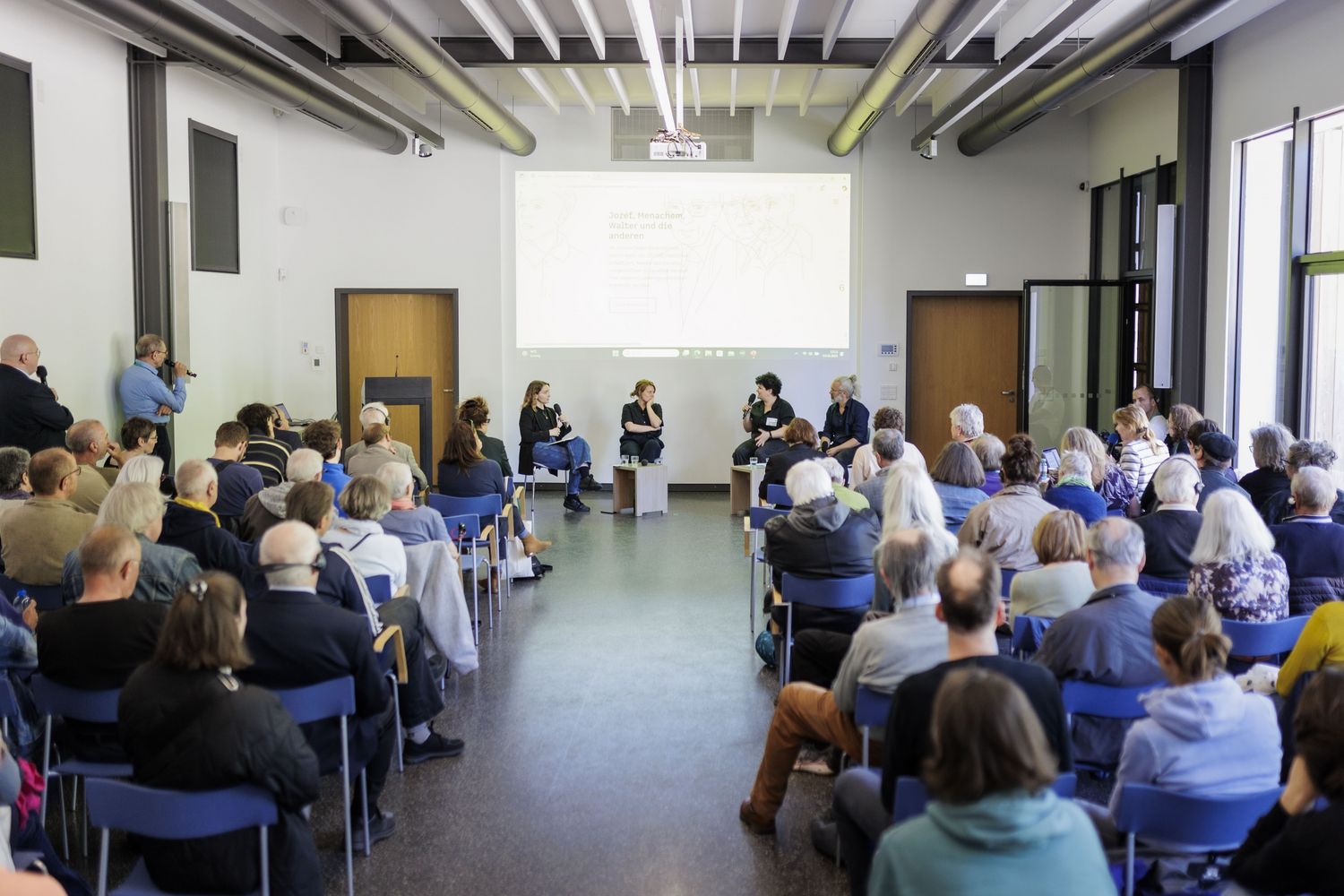
The online exhibition "A Few Barracks Further. The Men's Camp in the Women's Concentration Camp Ravensbrück" has been online since 2026 at https://afewbarracksfurther.ravensbrueck-sbg.de/en/ in German and English. The exhibition offers a visual and narrative access to the history of the almost 20,000 men incarcerated in the men's camp and presents 30 biographies. Through 30 contributions on seven thematic areas, diverse perspectives are conveyed: camp complex, everyday life in the camp, transports, perpetrators, self assertion and resistance, forced labor, and remembrance and aftermath. The exhibition also includes a virtual 3D model of the camp complex, a timeline from 1938 to 1945, a collection of objects from the archive, and a glossary of key terms.
To expand the source and data base, the project team conducted several archive visits to Germany, France, the Netherlands, Poland, and Slovakia in the first year of the project to examine extensive holdings. An important research result was the reconstruction of much of the incoming and outgoing prisoner transports of the men's camp. It emerged that there were unexpectedly many direct admissions and that some prisoners were transferred directly from Fürstenberg/Havel after having worked there as forced laborers or conscripted workers. A virtual 3D model of the Ravensbrück concentration camp, based on a variety of sources and depicting the situation at the end of the war in 1945, was acquired as part of the project.
The virtual exhibition represents the first in depth media treatment of this topic and aims to create as differentiated and representative a picture as possible of the male prisoners of the KZ Ravensbrück complex. Thematic focuses include the composition of the prisoner population, forms of forced labor, the system of prisoner functionaries, the differences to conditions in the women's camp, contact between male and female prisoners, evacuation transports and death marches, liberation, judicial reckoning, and the absence of commemorative culture. The exhibition presents individual persecution histories using a biographical approach.
Following completion of the exhibition, the project team is now working on an accompanying publication that will document the research findings.
The project was made possible through the generous support of the Fondation Tour du Monde.
